Partner Emma Elizabeth Altman, Lucy B. Hopkins
Queer Places:
Deerfield Academy, 7 Boyden Ln, Deerfield, MA 01342, United States
University of Illinois Urbana-Champaign, Champaign, IL, United States
Margaret Louisa Home, 14–16 E 16th St, New York, NY 10003, USA
579 5th Ave, New York, NY 10017, USA
4 Rue du Mont Thabor, 75001 Paris, France
500 N Glendale Ave, Glendale, CA 91206, USA
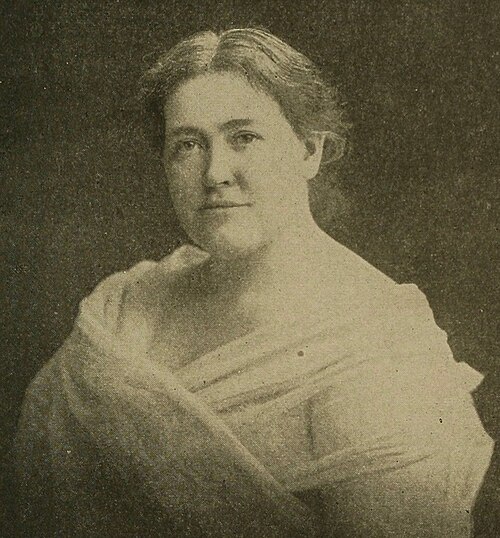 Ruth Fuller Field, better known by her pen name Mary Casal (June 17, 1864 - February 22, 1935), was born on June 17, 1864, in Deerfield, Massachusetts,
into a middle-class family as the youngest of nine children. Her father, Joseph Negus Fuller, was a musician and music teacher, her mother was Lydia Ann
White, and her uncle was the notable American painter George Fuller. Growing up as part of the historic Fuller family in Deerfield, she spent much of her
youth socializing with boys, attended Deerfield Academy, and experienced early trauma before attending the Illinois Industrial University (now the
University of Illinois Urbana-Champaign) to study literature and science. During her university years, she served as secretary for the student government
before leaving in 1883.
Ruth Fuller Field, better known by her pen name Mary Casal (June 17, 1864 - February 22, 1935), was born on June 17, 1864, in Deerfield, Massachusetts,
into a middle-class family as the youngest of nine children. Her father, Joseph Negus Fuller, was a musician and music teacher, her mother was Lydia Ann
White, and her uncle was the notable American painter George Fuller. Growing up as part of the historic Fuller family in Deerfield, she spent much of her
youth socializing with boys, attended Deerfield Academy, and experienced early trauma before attending the Illinois Industrial University (now the
University of Illinois Urbana-Champaign) to study literature and science. During her university years, she served as secretary for the student government
before leaving in 1883.
Following her time at university, Fuller worked as a schoolteacher in Beacon Hill, Boston, and subsequently married Frank A. Field on October 12, 1887.
The marriage ultimately dissolved amid personal tragedies, including stillbirths in 1889 and 1891—the second of which was alleged to be the child of IIU
professor William McMurtrie—and the union ended in divorce by 1894. Following her separation, Fuller displayed an independent entrepreneurial spirit by
patenting and marketing a children's toy, a rare pursuit for women of that era. Her business travels brought her closer to New York City, where a stay at
the Margaret Louisa Home led to a life-altering encounter. There, she met Emma Elizabeth Altman—a niece
of wealthy department store founder Benjamin Altman who was working as a clerk at the residence—whom she famously referred to as "Juno" in her writings.
The two fell deeply in love, committed to one another in a private ceremony in 1894, and later ran a school together while working as private secretaries
and managers for philanthropist Helen Miller Gould before their relationship eventually dissolved following
years of travel and time spent living in Europe.
In 1928 and 1929, prompted by editor Douglas Crawford McMurtrie (the son of her former acquaintances William and Helen McMurtrie), Fuller wrote a frank,
groundbreaking memoir detailing her life as a queer woman. It was published in 1930 by Eyncourt Press under the pseudonym Mary Casal to protect her privacy
and the identities of those she loved. Titled The Stone Wall: An Autobiography, the book stands as the first known full-length autobiography of a lesbian
woman in the United States, with its title inspiring local queer history such as Bonnie's Stone Wall in Greenwich Village. Within its pages, Casal famously
characterized her intimate relationships with women not as deviant, but as "the very highest type of love," arguing that their emotional and spiritual
bonds existed on "a much higher plane than those of the real inverts." Although she openly acknowledged physical intimacy, she emphasized intellectual and
emotional elevation over mere carnal impulse. Through her journey—from her early crushes in upstate New York to discovering a broader, hidden world of
same-sex desire—Casal provided an unprecedented window into late-19th and early-20th-century lesbian subculture, with her true identity remaining
undiscovered until Sherry Ann Darling's 2003 doctoral research at Tufts University. Ruth Fuller Field spent her final decades in California, working as the
secretary of the Chamber of Commerce in Calistoga and living alongside her partner Lucy B. Hopkins, until she
passed away following a femur fracture and subsequent chronic myocarditis and arteriosclerosis on February 22, 1935, in Tujunga. Today, The Stone Wall
remains a foundational text in LGBTQ+ history and literature, celebrated for its raw vulnerability and early articulation of queer identity.
References:
Other references:
- Casal, Mary (Ruth Fuller Field). The Stone Wall: An Autobiography. Chicago: Eyncourt Press, 1930. (The groundbreaking first full-length autobiography of an American lesbian woman).
- Field, Ruth Fuller. "The Home Life of Miss Helen Gould." Cosmopolitan Magazine, October 1907.
- Darling, Sherry Ann. A Critical Introduction to The Stone Wall: An Autobiography. Ph.D. dissertation, Tufts University, Department of Drama, 2003. (Advised by Prof. Laurence Senelick; the foundational thesis that successfully uncovered Ruth Fuller Field's true identity).
- McMurtrie, Douglas C. "Some Observations on the Psychology of Sexual Inversion in Women." American Journal of Urology, 1913. (Features case studies drawing directly from Field and her social circle, with Field recorded as Case VII).
- McMurtrie, Douglas C. "Principles of Homosexuality and Sexual Inversion in the Female." 1913.
- da Costa, Francisco Araujo. Chronology, Introduction, and Source Bibliography for Mary Casal (Ruth Fuller Field). Published and regularly updated on OutHistory (initially published July 2015, with ongoing scholarly updates).
- Grier, Barbara. Lesbian Lives: Biographies of Women from The Ladder. Naiad Press, 1976. (Discusses the historical significance of The Stone Wall).
- Turner, Sarah C. "The Vital Temperament" (featuring a photographic portrait of Mrs. Ruth Fuller Field). In The Attainment of Womanly Beauty of Form and Features, edited by Albert Turner, 1904.
- United States Federal Census Records (1880, 1900, 1930 collections documenting her residences in Massachusetts, New York, and California).
- Consular Registration Documents (Certificate of Registration of American Citizen, American Consulate-General, Paris, 1908).
- California Department of Public Health (Vital statistics, death certificates, and probate records for Ruth Fuller Field and Lucy B. Hopkins, Tujunga/Glendale, 1935).
Support this project
This website is a passion project researched, developed, and funded entirely by me. If you find the content valuable and would like to help support the ongoing research and hosting costs, any contribution is deeply appreciated.
Thank you for keeping this independent resource alive!
My books on Amazon: Elisa Rolle's books
BACK TO HOME PAGE


